


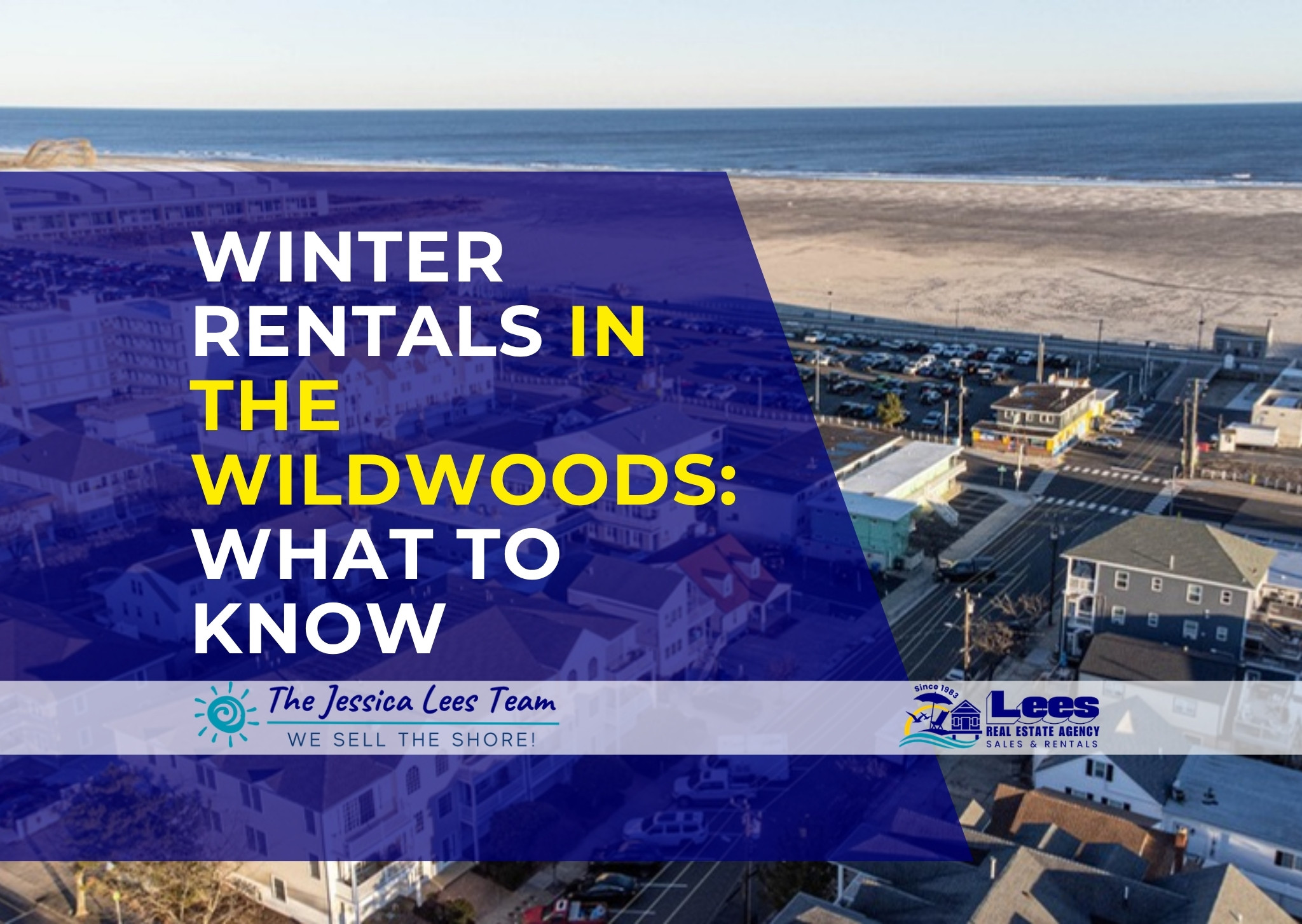
By The Jessica Lees Team | Lees Real Estate Agency | Serving the Wildwoods and Cape May County
Summer gets all the attention, but a lot happens on the island between Labor Day and Memorial Day. Every fall we hear from people looking for a place to live in the Wildwoods for the off-season, and from owners wondering whether their shore house should earn money in the winter instead of sitting empty. A winter rental can be a smart move for both sides, as long as everyone understands the rules before the lease is signed.
The Jessica Lees Team at Lees Real Estate Agency in Wildwood, NJ helps buyers, sellers, rental owners and renters across the Wildwoods and Cape May County, and our agency has served the island since 1983, over 44 years. Here's what you need to know about winter rentals in Wildwood, North Wildwood, Wildwood Crest, West Wildwood and Diamond Beach.
What Is a Winter Rental in the Wildwoods?
A winter rental is a furnished home or condo leased for the off-season, usually for several months, and then returned to the owner in time for summer. Many shore winter leases run from about September or October until spring, ending before the owner's summer weekly rentals begin.
Winter renters are often people working locally, families building or renovating a home in the area, people relocating to Cape May County who want to try island life before they buy, and retirees or remote workers who love a quiet beach. For owners, the appeal is simple: steady monthly income, someone keeping an eye on the property, and heat and lights on during the coldest months.
Is a Winter Rental a "Seasonal" Rental Under New Jersey Law?
Usually not. New Jersey law describes a seasonal rental as one for not more than 125 consecutive days, for residential use, by someone who has a permanent place of residence elsewhere. A lease that runs from fall through spring is typically much longer than 125 days, so it generally won't fit that definition.
That matters because New Jersey's tenant protection laws treat seasonal tenants differently from other residential tenants, and the law puts the burden on the landlord to prove a rental is seasonal. If your winter lease runs for many months, plan on standard residential landlord-tenant rules applying. Before you sign, have a New Jersey real estate attorney review your lease, especially the end date and what happens if a tenant doesn't move out on time.
How Much Can a Landlord Charge for a Security Deposit in New Jersey?
No more than one and a half times the monthly rent. According to the New Jersey Department of Community Affairs, the landlord must return the deposit, plus the tenant's share of any interest and minus allowable deductions, within 30 days after the lease ends, along with an itemized list of any deductions.
A few other rules owners should know:
Do Winter Renters Pay Sales Tax or Occupancy Tax?
Not if they stay at least 90 consecutive days under a written agreement. The New Jersey Division of Taxation considers someone who occupies a room or transient accommodation for at least 90 consecutive days a permanent resident, and Sales Tax, the State Occupancy Fee and any municipal occupancy tax are not charged for that stay.
There are a couple of details to watch:
Do You Need a Rental License for a Winter Rental?
Yes. Each town on the island has its own rental registration and inspection process, and it applies whether you rent for a week in July or for the whole off-season. New Jersey also requires a smoke alarm compliance certificate before a one- or two-family home is leased or changes occupancy. We break down the requirements town by town in our guide, Do You Need a Rental License to Rent Your Shore House in the Wildwoods?
Do Landlords Have to Give Winter Tenants the Truth in Renting Statement?
It depends on the building. The state's Truth in Renting statement must be given to new tenants with a rental term of at least one month in buildings with more than two units (or more than three if the landlord lives in one of them). Buildings with two or fewer units are exempt. If you own a unit in a larger condo or multi-unit building, ask your attorney whether it applies to you.
Should You Rent Your Shore House for the Winter?
It can be a great fit, but it isn't right for every property or every owner. Here's how we help owners think it through:
For more on the real costs of owning a rental property here, read Hidden Costs of Rental Property Ownership in the Wildwoods & Cape May County.
Tips for Renters Looking for a Winter Rental in the Wildwoods
Start early, get everything in writing and protect yourself from scams.
Frequently Asked Questions
Is a winter rental considered a seasonal rental in New Jersey?
Usually not. New Jersey defines a seasonal rental as 125 consecutive days or less by someone with a permanent home elsewhere, and most winter leases are longer than that.
What is the maximum security deposit in New Jersey?
One and a half times the monthly rent, and it must be returned within 30 days after the lease ends, minus any allowable, itemized deductions.
Do I pay occupancy tax on a winter rental?
Not if you stay at least 90 consecutive days under a written agreement. The State considers you a permanent resident for that stay.
Do I need a rental license to rent my shore house for the winter?
Yes. Each Wildwoods municipality requires rental registration and inspections, no matter how long the rental lasts.
Thinking About a Winter Rental?
Whether you're an owner deciding what to do with your shore house this off-season or someone looking for a place to call home on the island, we're here to help. Stop by The Jessica Lees Team at Lees Real Estate Agency, 5108 New Jersey Ave., Wildwood, NJ 08260, or call 609-729-5108 or visit WeSellTheShore.com. Planning a summer getaway instead? Browse our Wildwoods vacation rentals.
Follow The Jessica Lees Team on social media and sign up for our weekly newsletter for local news, market updates and tips for shore owners and renters, delivered straight to your inbox.
Sources: N.J.S.A. 2A:42-10.17 and N.J.S.A. 46:8-9.12 (definition of seasonal use or rental); N.J.S.A. 2A:18-61.1 (New Jersey Anti-Eviction Act); New Jersey Department of Community Affairs, Security Deposit Bulletin (revised July 2025) and Truth in Renting guide; New Jersey Division of Taxation, Hotel and Motel Permanent Residents and Transient Accommodations FAQ. This article is general information, not legal or tax advice.
Published November 2026

 609-729-5108

 5108 New Jersey Avenue, Wildwood New Jersey


